

Best Buy Health Digital Strategy
I led a project to help Best Buy Health determine the strategy to best serve their Health & Safety customers
Sales were down and Best Buy Health had little insight into why and what needed to be done to better meet the needs of their Lively customers.
Historically, they had optimized their sales and marketing strategies toward a device-oriented user, but needed to build out a second funnel focused on the needs of the services-oriented caregiver.
Challenge
Define a new digital strategy to help Best Buy Health remain viable and attract a more profitable customer for their Lively suite of products
Stakeholders
Design
Product
Marketing
Design approach
User-centered design best practices
Enterprise design thinking
Cross-functional collaboration
Project Objectives
Define end-to-end user journey
Identify user pain points and their business impacts
Propose solutions to drive digital strategy development
Break down silos and prompt discussion between stakeholder groups
Phase 1
Goals
Understand why health and safety services adoption is low as compared to device sales
Understand user pain points and obstacles.
Stakeholder interviews
We held interviews with stakeholders from marketing, product, and leadership and asked about our customer, offerings, previous missteps, opportunities, and challenges as well as assumptions and open questions they had.
Assumption mapping workshop
Based on what we heard from stakeholders, we mapped out assumptions and how to validate/refute them and who would own that research.
UX took ownership of secondary synthesis of existing research, competitive analysis, audit of current experience, qualitative user interviews, and concept testing.
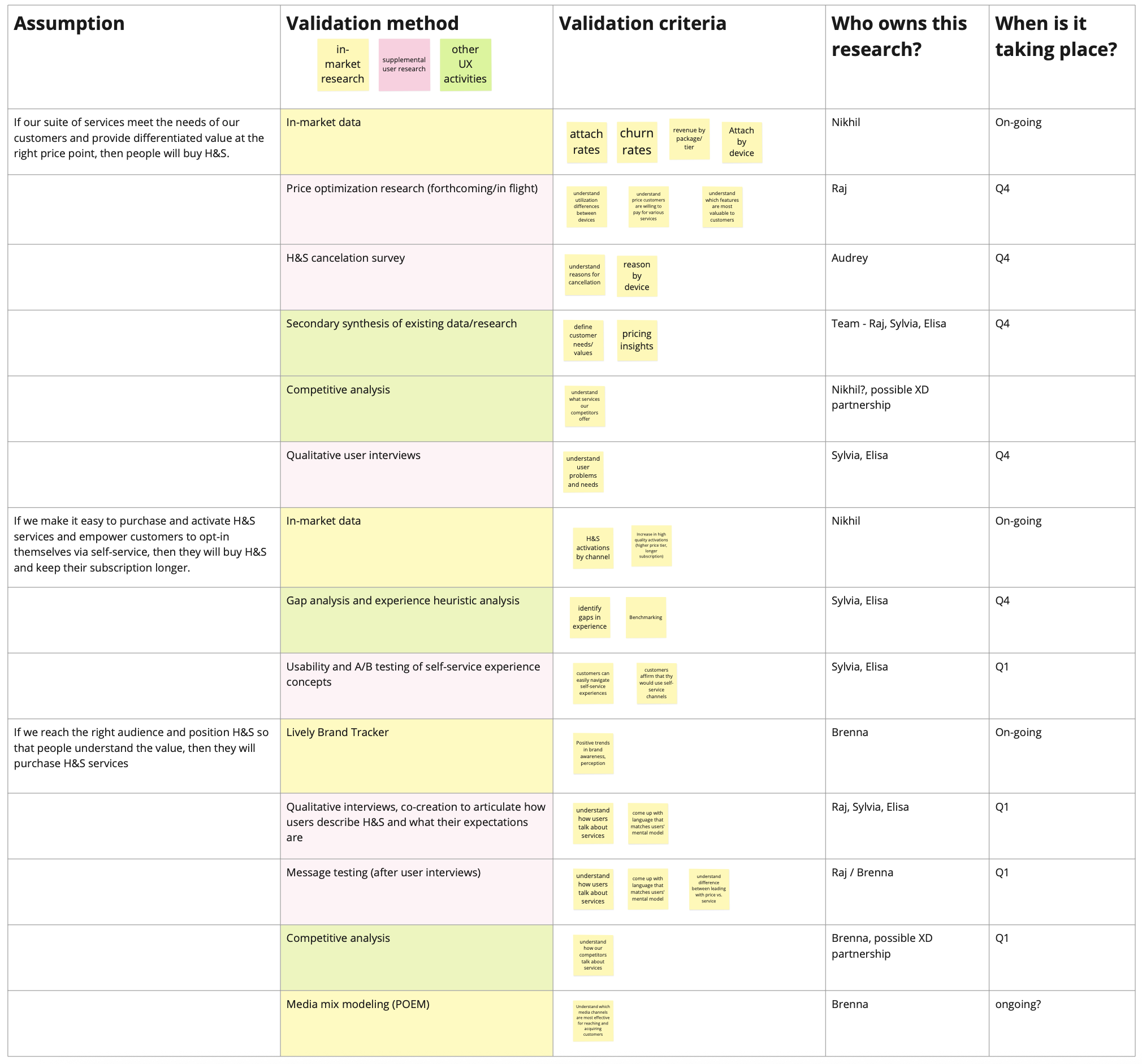
Assumption mapping exercise
Audit current experience
I went through each digital experience, focusing on Lively.com (information, ecommerce), Bestbuy.com (information, ecommerce), Lively app (primary app), and Link app (caregiver app) and mapped user flows, surfacing barriers to entry, usability concerns, and experience gaps.
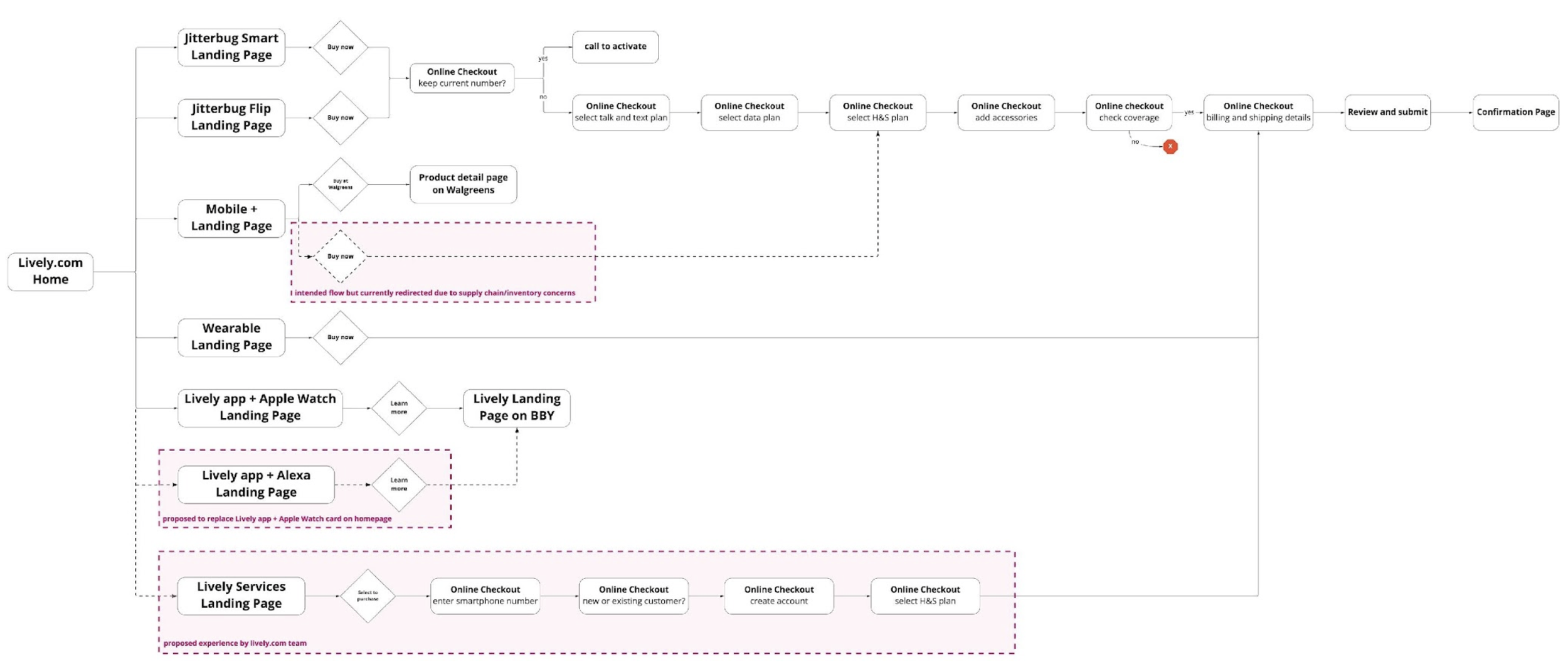
High level multi-channel user flow
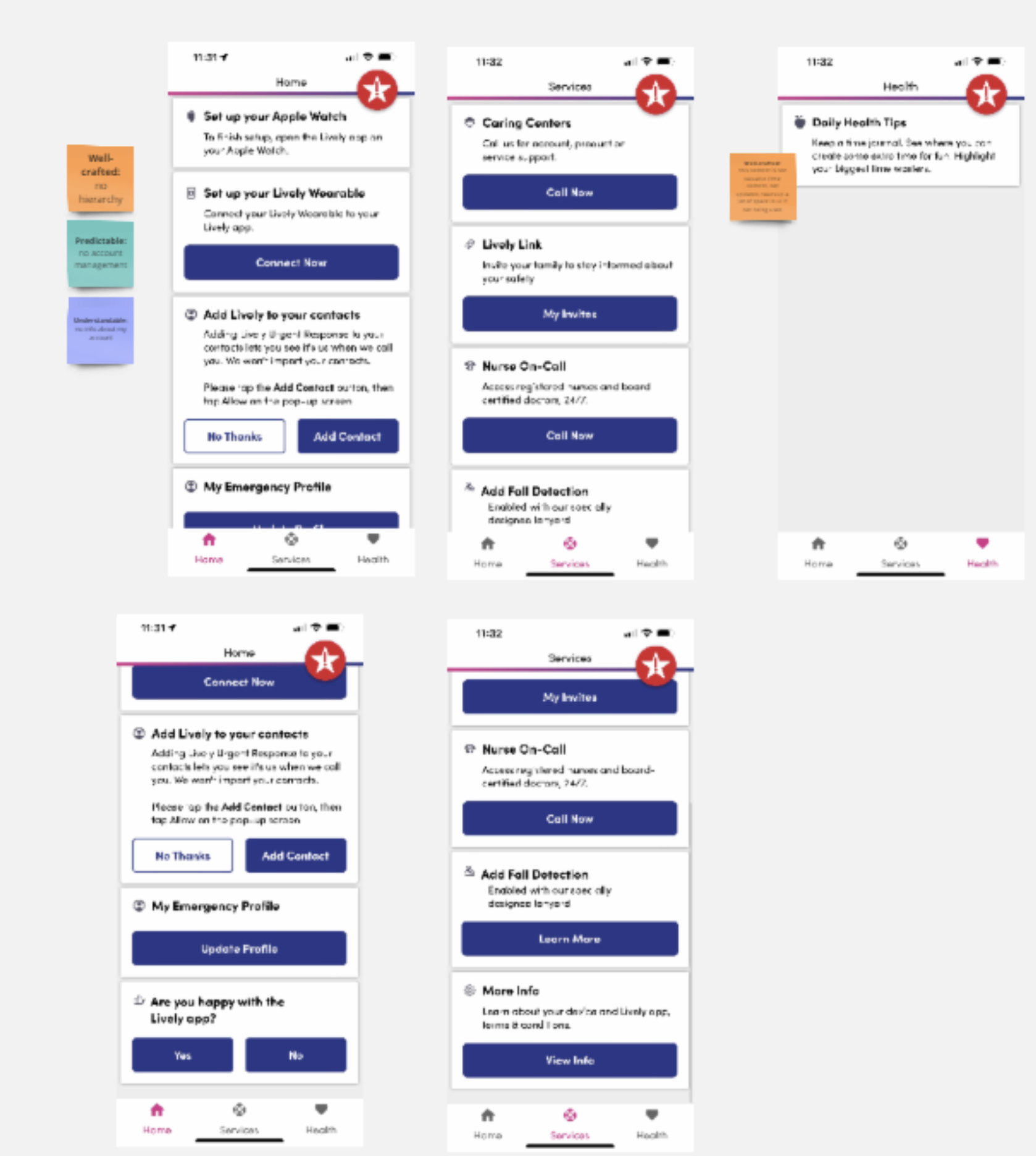
Lively app experience audit
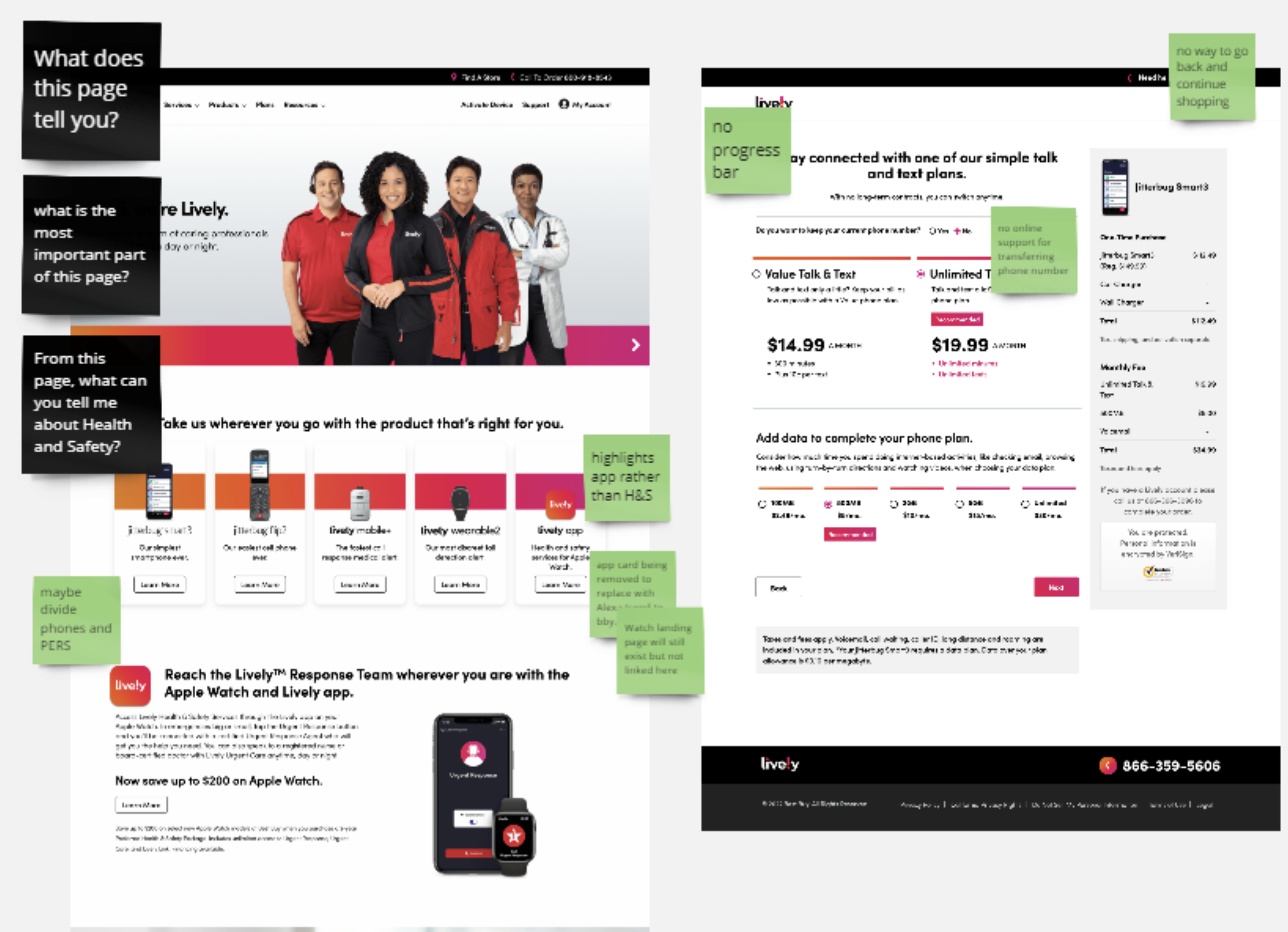
Lively website experience audit
How might we empower prospective Lively customers to understand the value of Health & Safety and enable them to confidently purchase independently?
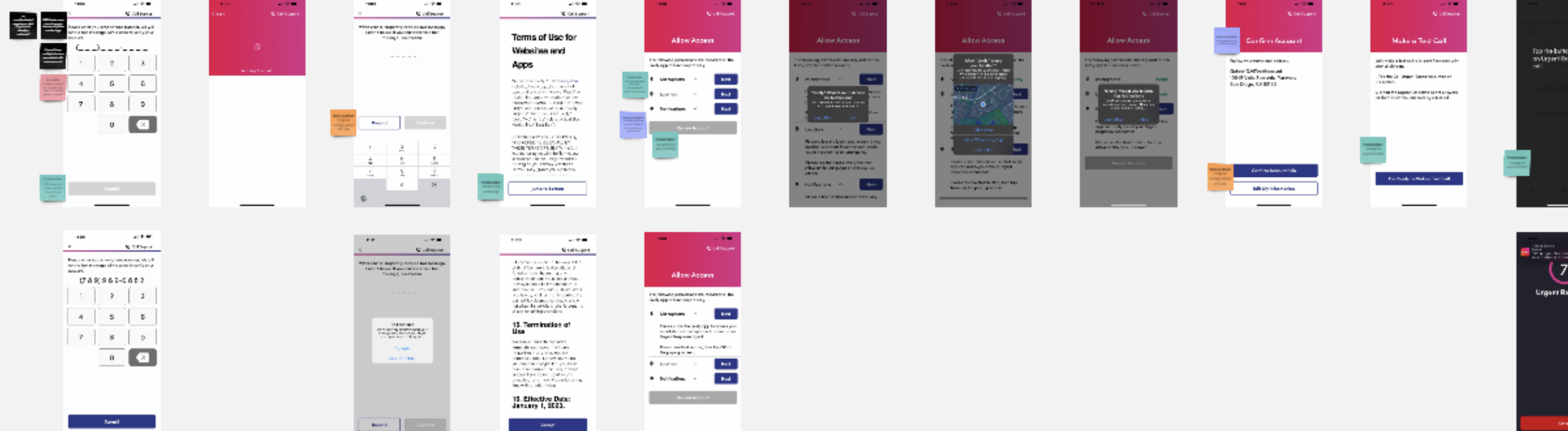
High level multi-channel user flow
Define user problem
Some users don’t understand the value of the Health & Safety services. Product positioning is unclear and not compelling.
Users who understand the value of Health & Safety services can’t complete the purchase flow online due to multiple barriers to entry preventing users from completing their purchase independently
Alignment and prioritization workshop
After sharing out my findings, I facilitated a series of workshops to align cross-functional stakeholders. We went over experience audit findings and wrote user needs statements, and used dot-voting to determine which were high impact and high feasibility to aid in prioritization.
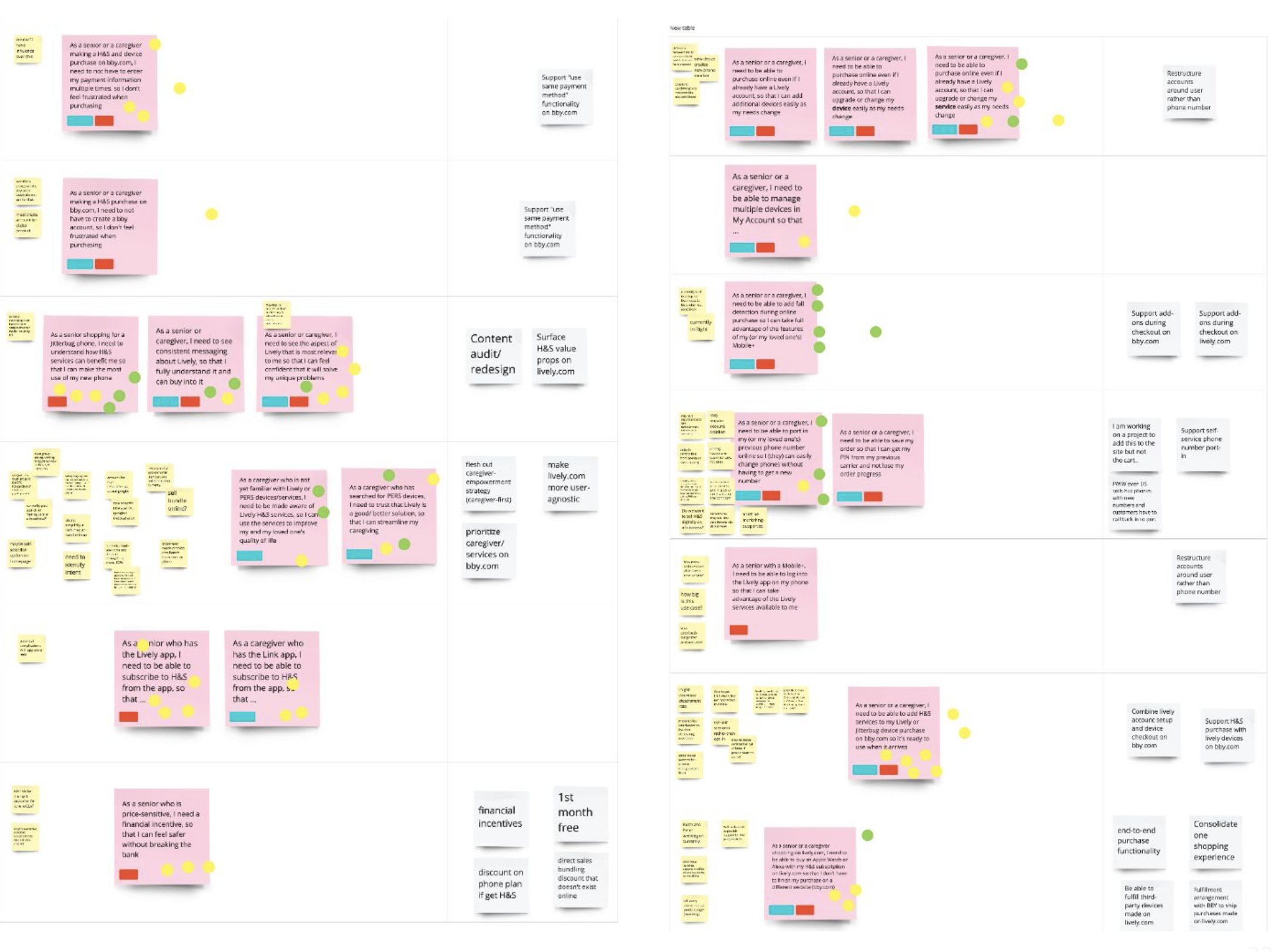
Stakeholder alignment workshop
Phase 2
Goals
As a result of research conducted during Phase 1, Best Buy Health leadership began to understand how the lack of comprehensive digital presence was costing them valuable customers and Phase 2 was dedicated to understanding how best to pivot the business and access a new type of customer
UX activities
Qualitative user interviews and persona development
I recruited and conducted 11 45-minute phone sessions with current customers (end users and caregivers) to understand drivers to adoption and develop personas. I discovered that
Devices were the primary driver to purchase (emergency response secondary)
Caregivers mentioned urgent response as a motivating factor more readily while end users mentioned phone features such as big buttons or louder volume more often
Other services were not a significant motivating factor in purchasing, and customers didn’t understand what they did, that they were paying for them, or that they might be useful to them
End users expressed more price sensitivity than caregivers did
I was able to draw the conclusion that caregivers are more motivated by services and are less price sensitive so we should support them more as a target customer.
User interviews informed high level user personas including a price-sensitive device-first user who was looking for a simple, affordable, accessible mobile phone and a more tech-savvy, less price-sensitive caregiver who understands that their loved one’s needs are increasing and wants to stay better connected.
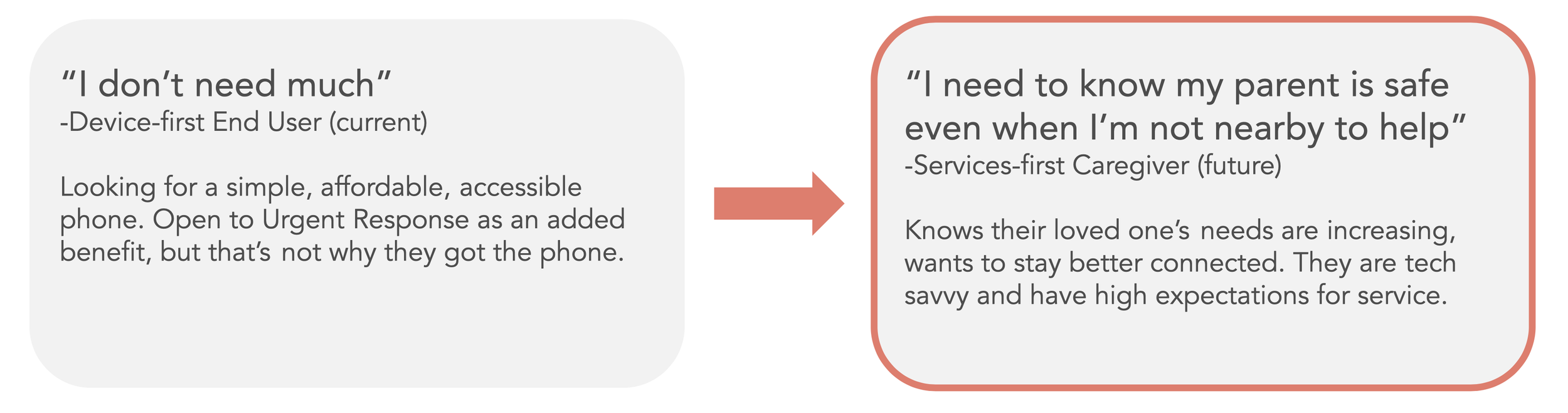
User journey mapping
User research revealed primary and secondary end to end user journeys
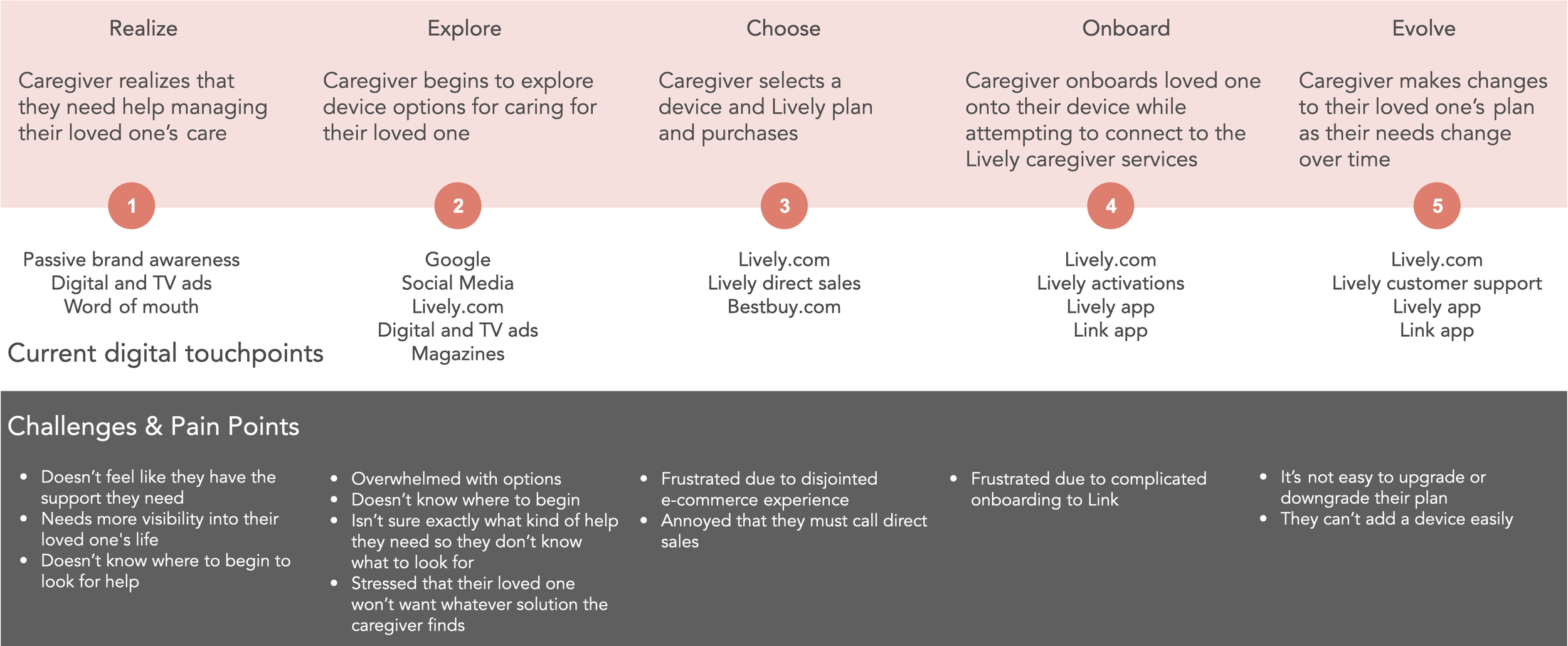
Primary target user - Caregiver
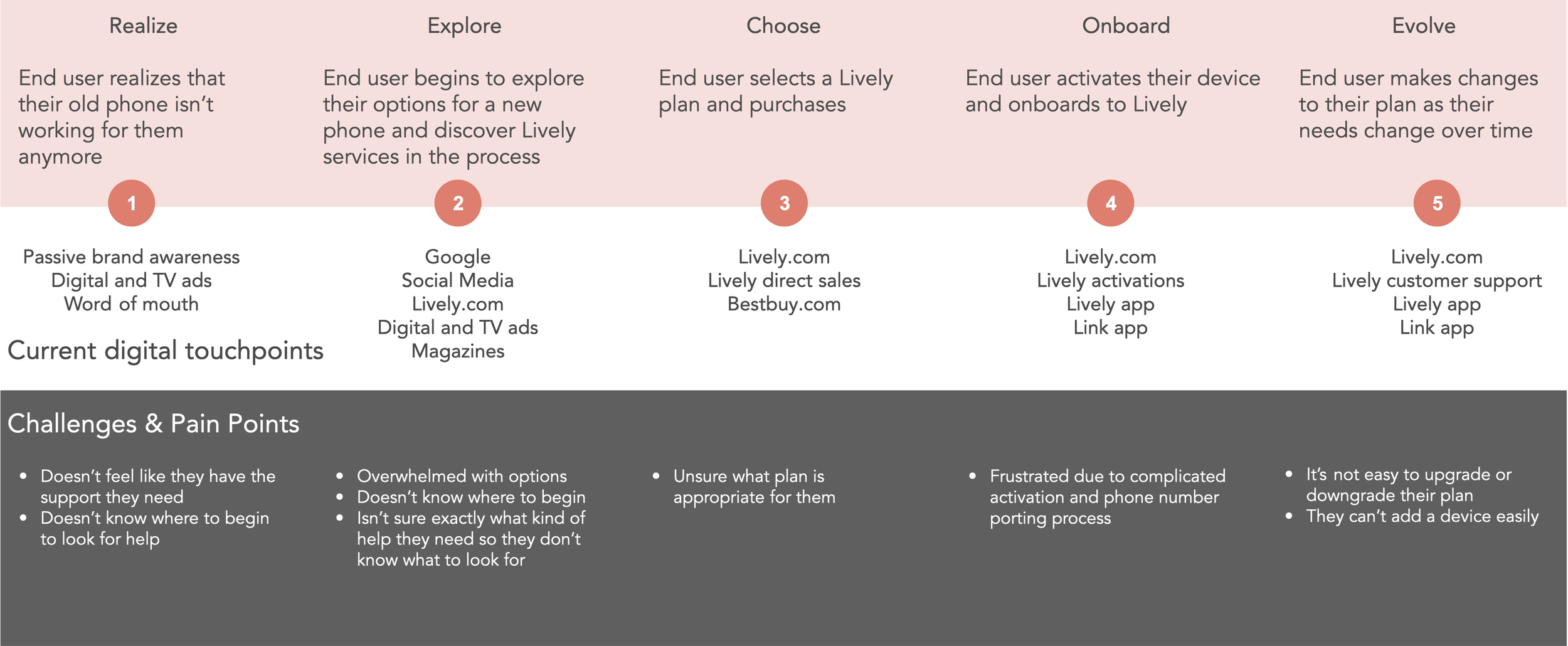
Secondary target user - End user
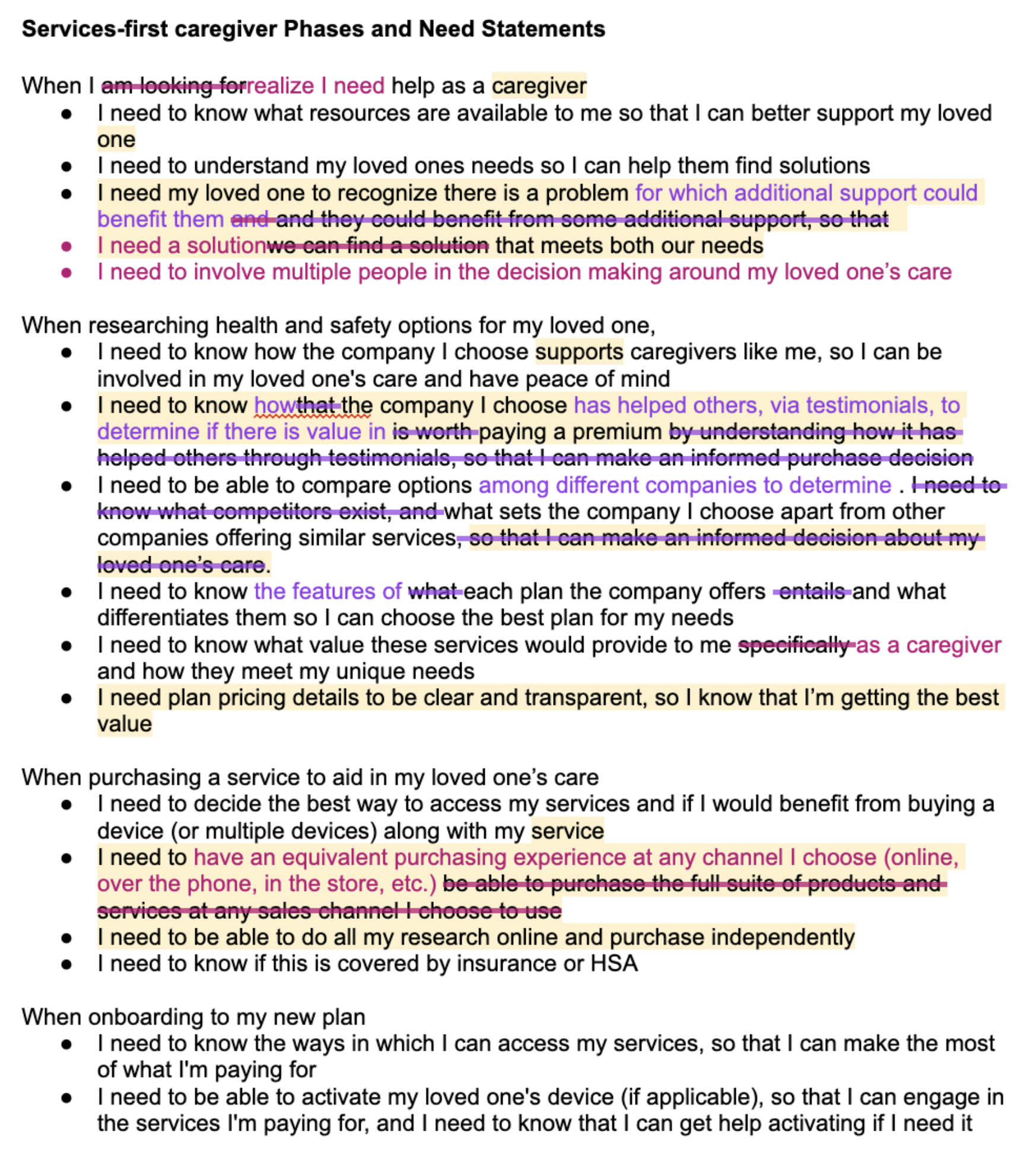
User Needs workshop
Based on the user journeys, I facilitated a workshop to develop user needs statements, then worked in collaboration with UX research and market research to develop a survey to validate the statements.
Next steps and debrief
Next: define digital strategy
Utilizing this research, build a new cross-functional acquisition model based on recommendations and redesign the end-to-end digital experience that makes it simple to understand the value of Lively services, subscribe to services in the channel of the customer’s choice, and utilize the offerings on their device of choice
What went well
The business acknowledged the gaps in the experience that was alienating their more profitable customer group and pivoted to better support tech savvy, services-oriented caregivers
What didn’t go well
Misalignment between marketing and other departments caused resistance to evolving the business model. This meant that despite research findings, it was very difficult to get buy-in on changes.
Legacy processes made progress extremely slow and constant re-orgs made getting a durable team together difficult and decision-making roles were often unclear.